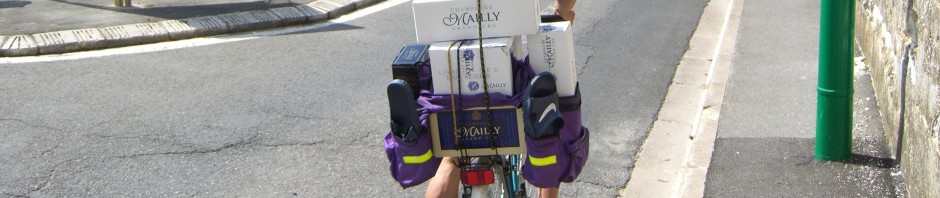
A couple of months ago, I had a “significant” birthday and as part of the seemingly non-stop several month celebration, I spent the week of the actual birthday out with good friends in Healdsburg, California. While I am certainly a proponent of drinking good, or even great, wine when ever possible, I am not a “trophy wine” kind of guy. I am a strong believer, though, that good wines should be shared with good friends, whenever possible. So here are a few of the wines we opened during that very fun week.
2019 Domaine Carneros Brut Late Disgorged, Carneros, CA: Retail $62. 61% Pinot Noir, 39% Chardonnay (Estate-grown). Six years sur lie. I have had a ton of the more standard release wines from Domaine Carneros, but the number of times I have tasted the Late-Release wines I could probably count on one hand. The production is limited, which is part of the reason, I am sure. This 2019 Brut might be among the best domestic sparkling wines I have tried. Brilliant in the glass with a luscious, rich nose of candied Golden Delicious apple, hazelnut, and oodle upon oodle of fresh-baked croissant goodness. So much so, that I feel safe in saying that this is the most Champagne-like domestic sparkler I have sniffed in a very log while. The palate more than continues on this theme with an initial wave of that yeasty goodness followed by a wave of baked apple, a touch of honey, and then right back to that yeastiness all the way through the quite lengthy finish. Like I said, this is a rare wine, at least for me, as this sparkler hits every mark for me. Outstanding. 97 Points.
2012 Clos Pepe Estate Pinot Noir, Sta Rita Hills, CA: Retail $50. Heavy Bottle (604g; 1lb 5.3oz). Under cork. Well, it has surprisingly been nearly two and a half years since I last popped a cork of this beauty. While little has changed, day one was a bit of a bummer as it was Excellent, but it lacked the normal verve and energy that I associate with these older bottles from the Clos. Day Two was a different story altogether with much more fruit, a zingy tartness, and, well, a helluva lot more verve. Yeah, this is the Clos Pepe I remember. Outstanding. 94 Points.
2022 Domaine / Maison Vincent Girardin Bourgogne Blanc Cuvée Saint-Vincent, Burgundy, France: Retail $32. 100% Chardonnay. Under Diam10. I have respected this producer for a while now, and even though it is a fairly big négociant, the wines are always top-notch. Case in point. I picked this up on a whim from a big box store while I was on the West Coast, not expecting all that much, as it was right around twenty bucks. But boy, did it deliver. Tons of citrus, white peach, and a touch of pear on the nose with just a sliver of oak. The palate is fruity, on the verge of rich, quite tart, with an additional floral note and plenty of length. It was so good, in fact, that I bought a second bottle for the following day’s continuation of my wife’s family’s get-together. Yeah, it was a bit of a “sheet” show, but this wine made it go just a little bit better. Excellent. 90 Points.
2023 Palmeri Chardonnay Daisy’s Durrell Vineyard, West Sonoma Coast, CA: Retail $63. I was out in Sonoma for my birthday with some winemaker friends, and I ended up with this Chard to try (somehow–I am not really sure, as there was a ton of wine that night…) and it is pretty fantastic (though sixty-three bucks worth of fantastic???). It comes from a vineyard that many would classify as “Grand Cru” for the US, and the wine certainly exhibits that pedigree. Loads of fruit on the nose, mostly tropical (guava, mango), but also some more traditional tree fruit (fresh peach, a hint of yellow apple). There is also a wet rock/mineral aspect that seems to try to corral all of that fruit, and a subtle oak element that really works. The palate is a delight with a boatload of fruit, an equal amount of tartness, that mineral aspect, and plenty of spice and intrigue. I believe this is my first foray into the brand, and it is a delightful introduction. Outstanding. 93 Points.
2018 Ridge Zinfandel, Benito Dusi Ranch, Paso Robles, CA: Retail $40. Responsible Bottle (579g; 203.oz). Under cork. Benito Dusi Ranch. My wife pulled this from the cellar and served it to me blind. Luckily, I got it right (#HelpsToKnowYourCellar). As I mentioned in a previous note, I was sent a bottle of this wine for an article I wrote for Zinfandel Advocates and Producers (ZAP), in which I wrote that the Benito Dusi Vineyard is perhaps the vineyard in Paso for Zinfandel. The story is compelling and no history of Paso Robles could be told without including the Dusi family and the Home Ranch (which is now called the Benito Dusi Vineyard). I loved that first bottle (94 Points), and I love this one as well (which I purchased from Last Bottle Wines). Dark, rich, concentrated, and fruity, but also balanced, this wine showcases that Zinfandel can be more that a juicy, bombastic, playful wine; it can be a well-made, contemplative, and serious wine as well. Bravo to Ridge Vineyards and to the Dusi family for treating this region, vineyard, variety, and wine with the respect it deserves. Outstanding. 94 Points.
2010 Skewis Pinot Noir Montgomery, Russian River Valley, CA: Retail $50. Heavy Bottle (647g; 22.7oz). Surprisingly (at least to me), this is the first bottle of this wine that I have opened. I received it back in 2012 when I was a member of the “wine club” and, well, I have held onto the two bottles I acquired that November since then. While the last tasting note for this wine here on CellarTracker was from 2014, it is difficult for my feeble mind to comprehend that this wine was any better back then, as it is absolutely fabulous right now. While I am no “expert” when it comes to Hank and Maggie’s wonderful wines, I dare say that this might be the best iteration of their portfolio that I have tried (although there were a couple of 2009s that would like a word). And that is saying something, as I estimate that I have opened in excess of 100 bottles of wine from the now-retired winemaker (2014 was the last vintage). Still a dark color in the glass with minimal bricking and loads of fruit on the nose. Really. I tasted this blind and was initially convinced it was less than a decade old. By a lot. Blackberry, black cherry, black raspberry, a ton of dark fruit (particularly for a Pinot) on both the nose and palate with more than ample amounts of earth (forest-like floor), spice (clove), and verve. Holy cow. This is one of those wines that stops me dead in my tracks; I have loved Skewis wines for decades now, but this 2010 Montgomery? Whoa, it is Extraordinary. 98 Points.
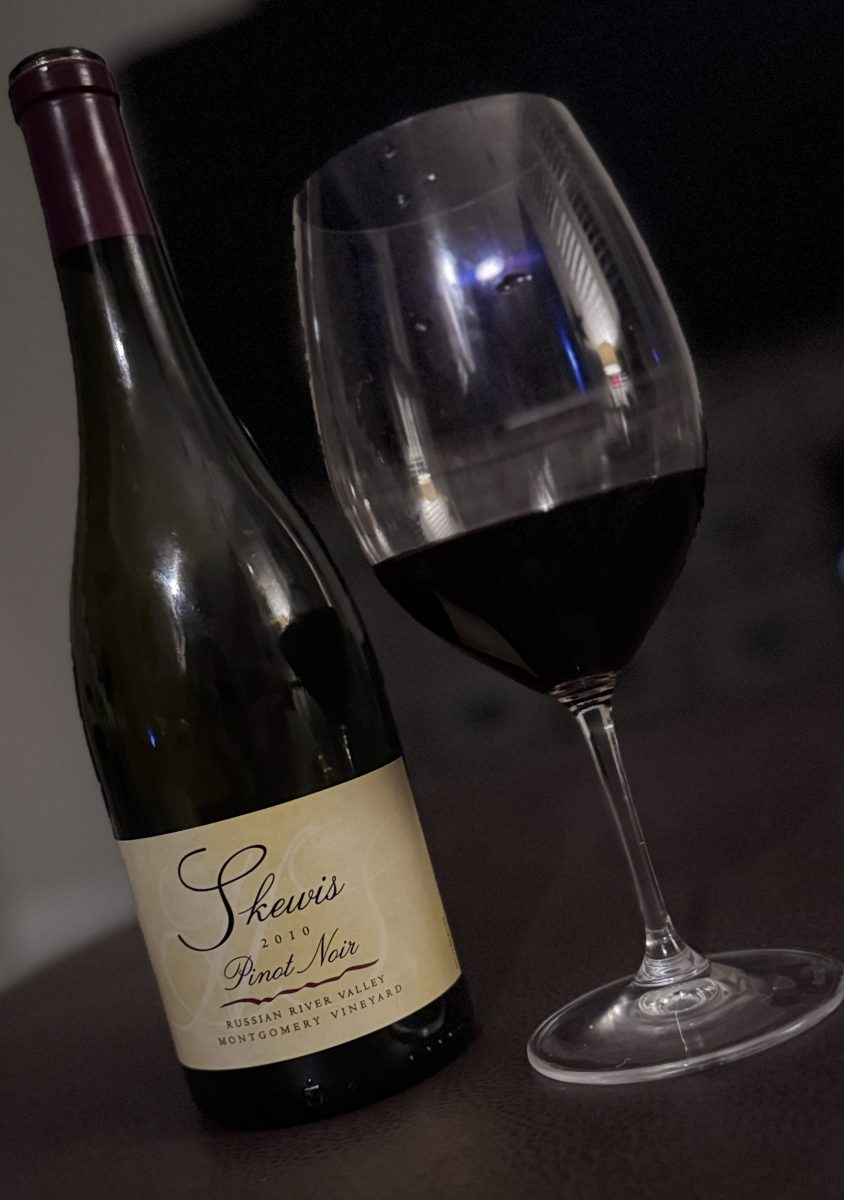
WINE OF THE WEEK: This year, given its “significance” (at least according to my wife), my birthday “celebration” dragged on for quite some time (almost three months). Even though I am not a believer in “trophy” wines, when I finally found myself at home, I decided to pull a few wines from the cellar that, like me, were not getting any younger, and (also like me), I was hoping had at least a little bit of life left in them. Well, the 2010 Skewis Pinot Noir, Montgomery Vineyard, this week’s Wine of the Week, met and surpassed that criterion. I bought a ton of Skewis right before Hank and Maggie retired and this 2010 Montgomery makes me more than excited for the remaining few I have left.
What was your Wine of the Week?